WEB1 vs WEB2 vs WEB3 - The Ultimate Intruduction to web3
Hey!, welcome to my personal blog, I am a web3 believer and a junior smart contract developer, I will be sharing my thoughts and documenting my journey here. This is actually my first blog post, and I hope it helps out in creating an understanding about web3, subsequently, I would be making more educational posts about web3, how it works and how to get settled in, and also, complex stuffs like smart contract development as well as sharing my codes here. So, let’s get started!
How the Internet Evolved
The internet we use today didn’t arrive fully formed. What we use today is the result of three major evolutionary phases; Web1, Web2, and now Web3.
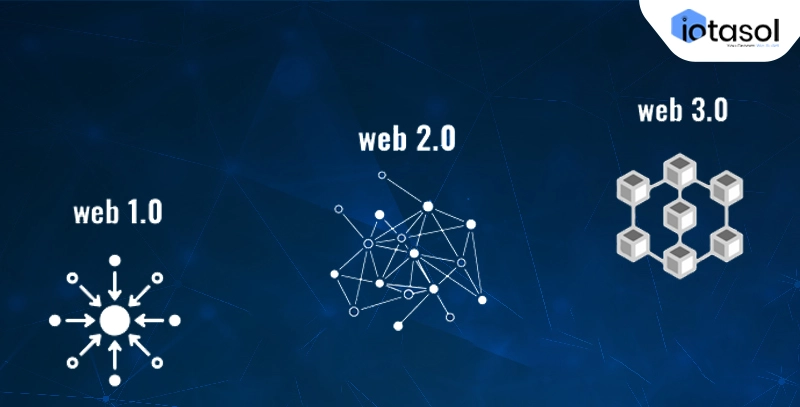
Each phase changed who controls data, how value moves, and who truly owns the internet.
To understand why Web3 matters, we must first understand what came before it.
What Is Web1?
I call it “The Read-Only Web” Timeframe*: Early 1990s – early 2000s*
Web1 was the first version of the internet, characterized by Static web pages, One-way communication, No user interaction, No accounts, likes, comments, or uploads.
How It Worked: Content was created by a small group of developers and companies, while everyone else simply consumed information. Examples; Personal HTML websites, Early news portals, Company brochure websites.
Web1 posed several limitation because users had no voice, no ownership or identity, no direct interaction.
In summary, you could read, but you couldn’t participate.
What Is Web2?
I call it “The Read–Write Web” Timeframe*: Early 2000s – Present*
Web2 introduced interaction, social media, and user-generated content. This is the internet most of us know today. Mainly characterized by dynamic websites, user accounts & profiles, social interaction (likes, shares, comments), centralized platforms.
How It Works: Users create content, but platforms own and control it. Your data lives on centralized servers controlled by corporations. Examples includes; social media platforms, streaming services, online marketplaces.
Web2 is limited due to cost, data harvesting, censorship risks, platform dependency, monetization controlled by companies
Summarily, web2 was like renting an apartment where you can decorate, invite guests, live comfortably BUT you do not own the building, rules can change anytime and you can be evicted. In web2, you participate—but you don’t own anything.
What Is Web3?
I refer to it as “The Read–Write–Own Web” Timeframe: Emerging (2018 – Future)
Web3 to me became a major fundamental shift from platforms owning the internet to users owning their digital lives. Web3 is essential anchored to technologies such as Blockchain, Cryptography, Smart contracts, Decentralized networks.
It is characterize by; Decentralization, Permissionless access, User-owned identity & assets, Trust minimized systems
How Web3 Works: Instead of logging in with email and password (as in web2), users connect via cryptographic wallets. Ownership is verified by the blockchain and not a company (like in web2). Users own digital assets, identity, data and value.
A perfect example in illustrating the distinction between Web2 and Web3 is that Web2 is like a traditional Banking system where the Bank holds your money, can freeze accounts, you need permission WHILE Web3 is a Digital Cash, you hold your funds, no middleman, transactions are direct. This is why Web3 is often described as financial sovereignty.
Examples of Web3 Use Cases
Decentralized finance (DeFi)
NFTs & digital ownership
DAOs (community governance)
Permissionless applications
Summary: Web1 vs Web2 vs Web3 (Quick Comparison)
Feature | Web1 | Web2 | Web3 | |
|---|---|---|---|---|
Interaction | No interaction | Limited interaction | Unlimited interaction | |
Ownership | No ownership | No ownership | Owned by users | |
Control | Companies | Big Techs | Users | |
Data | Static | Centralized | Decentralized | |
Trust | Institutions | Platforms | Cryptography |
Why Web3 Matters
I see Web3 not just as a technology upgrade but as a it’s a philosophical shift: From trust in institutions → trust in code, from renting platforms → owning networks, from surveillance → sovereignty.
everything web aims at is to solve long-standing issues of data exploitation, financial exclusion, and centralized power.
But then, is Web3 Perfect? Personally, I’d say No, and that’s important to say. Why? Complexity for beginners, Scalability issues, Security risks (poor implementations), and Regulatory uncertainty.
And Hey, just to note, Web3 is early, just like Web1 once was.
The Internet Is being rewritten Web1 gave us access to information. Web2 gave us participation. Web3 gives us ownership. Whether Web3 succeeds fully or partially, one thing is clear: The future of the internet is more user-centric than ever.
My name is Franklin, and I am a Web3 believer and a Junior smart contract developer. I love web3 and everything it entails.
Reach out to me via:
X (formerly twitter): https://x.com/Ox_DxDy